
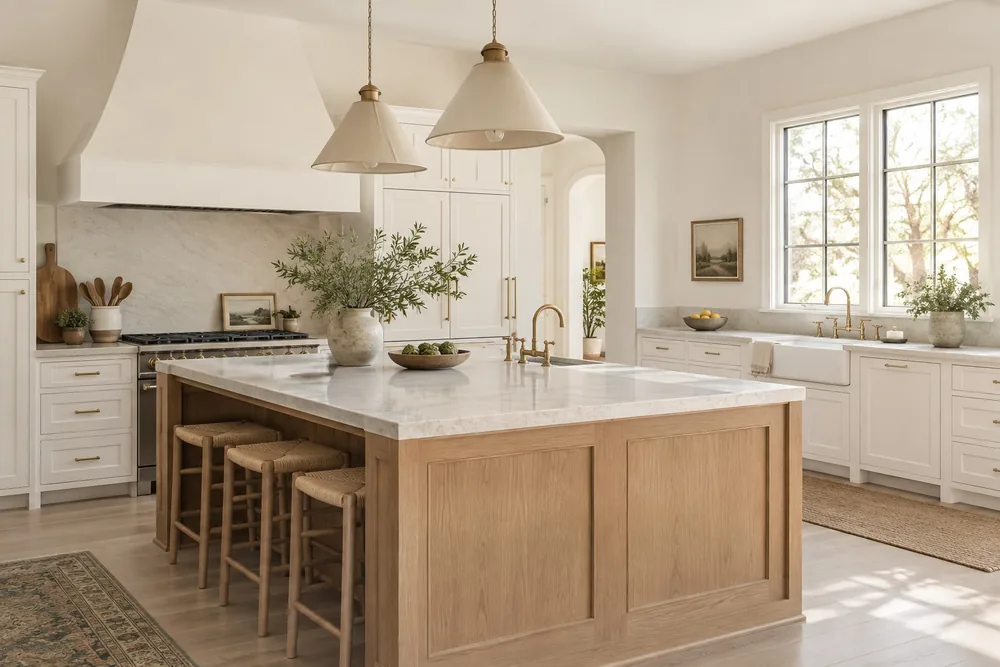
Follow the room through its ordinary day
Judge Soft Chamois under the light you actually use, rather than expecting one constant screen appearance. Its LRV is 77.4; the key concern is soft white walls next to warm natural finishes . Soft Chamois offers a shaded warm-white appearance rather than the strongest possible white contrast.
Limestone and unbleached cotton can support that softness, but the existing ceiling white sets a separate boundary that should be kept visible.
Keep the surroundings in the test
Observe the joint between Soft Chamois and the fixed white at the times the room is used. Keep curtains in their usual positions and avoid judging under a temporary work light. The significant change may be a warmer-looking boundary rather than a dramatic change in overall wall brightness.
Soft Chamois has an LRV of 77.4; Benjamin Moore Ballet White OC-9 is 71.97. The difference is 5.43 points, with Soft Chamois returning more light under the reference measurement.
The condition for keeping Soft Chamois
Compare it with the actual ceiling white so the subtle warmth reads as a coherent layer. The undertones and neighboring colors covers that related choice. The physical-sample checklist covers that related choice.
Record the condition that made Soft Chamois least convincing as well as its best view. If only a short period of daylight works, change the color or the room plan rather than ignoring the hours when the space is occupied. The north-facing room assessment covers that related choice. Before ordering samples, compare room-planning features in the paint color visualizer roundup.
Sources & notes
Color specifications: Benjamin Moore Soft Chamois OC-13. The recorded LRV is 77.4. Named comparison values come from the respective manufacturers; material schemes are editorial suggestions.
This guide reviews published color information and proposes practical sample checks. It does not claim first-hand paint testing or customer-review scores. Benjamin Moore does not sponsor or endorse this site. Product names and trademarks belong to their respective owners. Confirm the color in a physical sample and select the coating for the actual surface and finish.