
Define a reason to reject the sample
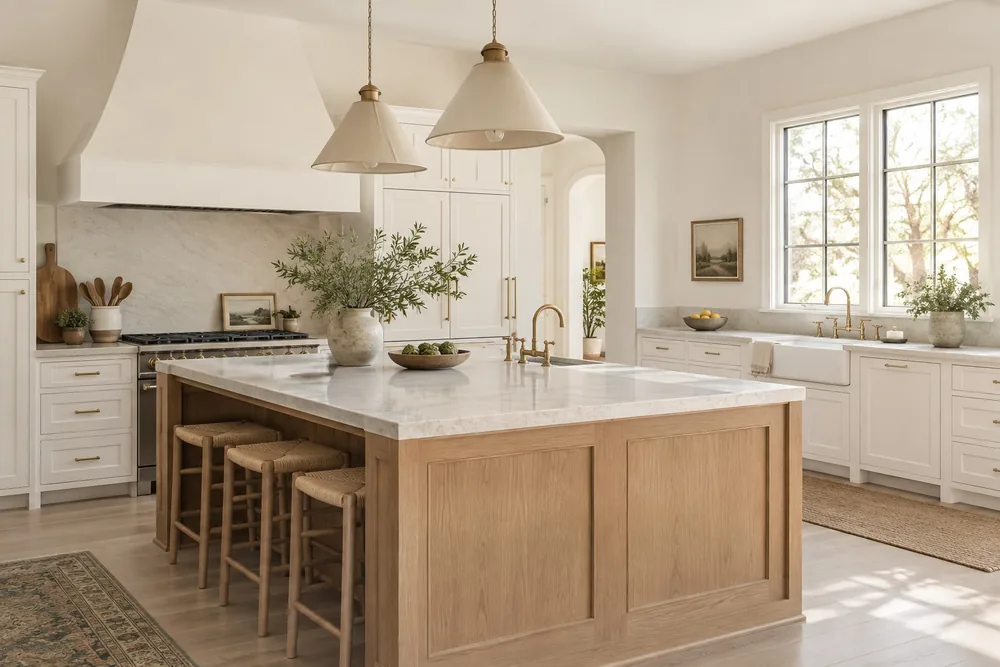
Skip Soft Chamois when its color character or depth conflicts with a fixed finish you plan to keep. The main issue to resolve here is soft white walls next to warm natural finishes. Soft Chamois offers a shaded warm-white appearance rather than the strongest possible white contrast.
Limestone and unbleached cotton can support that softness, but the existing ceiling white sets a separate boundary that should be kept visible.
The material conflict matters more than popularity
Reject Soft Chamois if the continuous edge against a fixed white remains uncomfortable in ordinary light. Adding an attractive accent color elsewhere will not resolve that joint. Choose the next sample for the specific cabinet, stone or trim mismatch rather than merely selecting another popular white.
Soft Chamois has an LRV of 77.4; Benjamin Moore Ballet White OC-9 is 71.97. The difference is 5.43 points, with Soft Chamois returning more light under the reference measurement.
The condition for keeping Soft Chamois
Compare it with the actual ceiling white so the subtle warmth reads as a coherent layer. The undertones and neighboring colors covers that related choice. The physical-sample checklist covers that related choice.
If making Soft Chamois work requires replacing materials you intended to keep, revise the paint shortlist first. A successful sample should resolve the room brief, not expand the renovation without a clear reason. Before ordering samples, compare room-planning features in the paint color visualizer roundup.
Sources & notes
Color specifications: Benjamin Moore Soft Chamois OC-13. The recorded LRV is 77.4. Named comparison values come from the respective manufacturers; material schemes are editorial suggestions.
This guide reviews published color information and proposes practical sample checks. It does not claim first-hand paint testing or customer-review scores. Benjamin Moore does not sponsor or endorse this site. Product names and trademarks belong to their respective owners. Confirm the color in a physical sample and select the coating for the actual surface and finish.